Is It Halal?
Is Vanilla Extract Halal?
Muslim scholars and halal authorities have different views on whether small amounts of alcohol-based vanilla extract are permissible in food.
September 8, 2026 · 15 min read
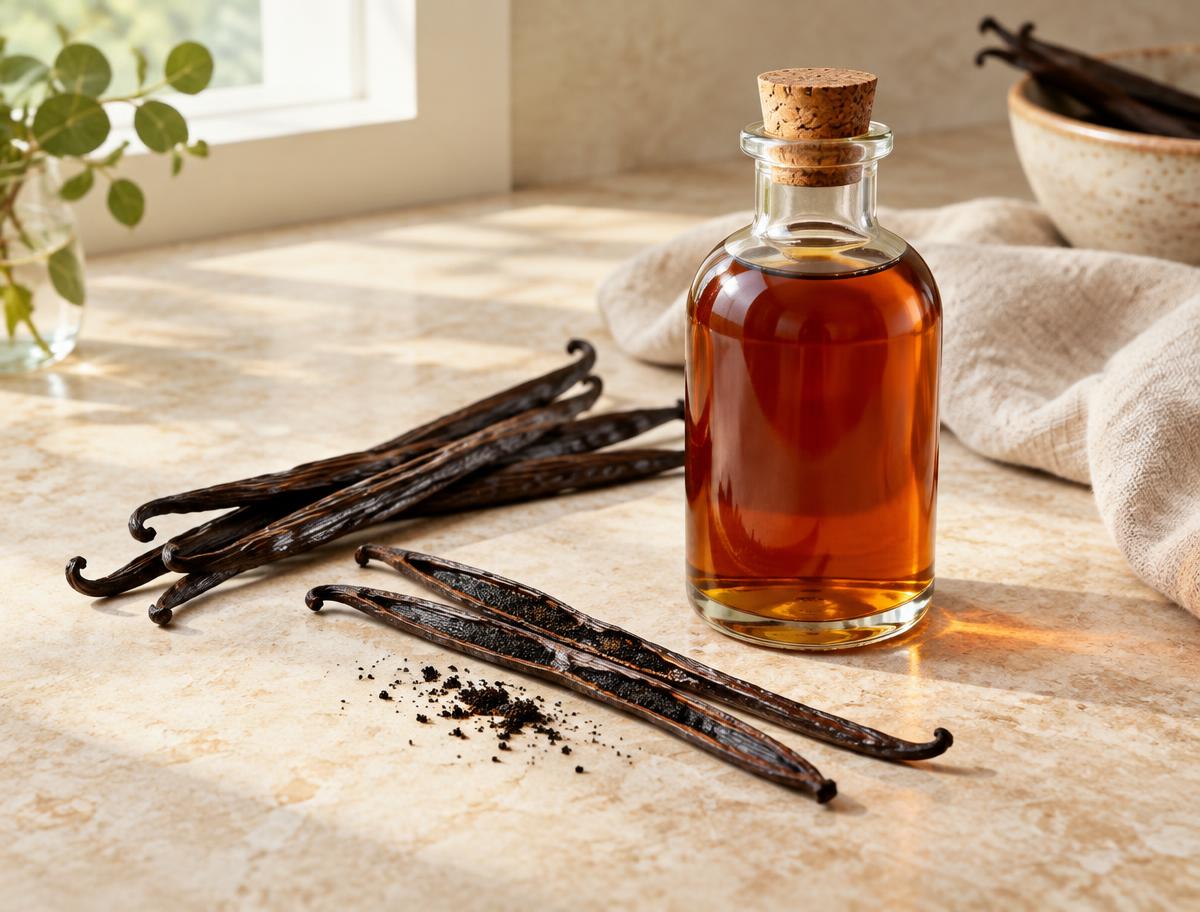
If you've ever checked the ingredients in a dessert and wondered, “Is vanilla extract halal?”, you're not alone.
Vanilla seems harmless enough. It's a staple in cookies, cakes, ice cream, and countless other desserts. But traditional vanilla extract contains a surprising amount of alcohol—at least 35% ethyl alcohol by volume under U.S. regulations.
So does that mean vanilla extract is haram?
The answer isn't completely straightforward. Muslim scholars and halal authorities have different views on whether small amounts of alcohol-based vanilla extract are permissible in food.
Some scholars permit foods containing small amounts of vanilla extract because the alcohol is used as a flavoring solvent and is present in such a small amount in the finished food that it does not intoxicate or leave a discernible effect. Other scholars take a more cautious approach and recommend avoiding intentionally added alcohol.
There are also differences based on the source and purpose of the ethanol, particularly in some Hanafi rulings and halal standards.
In this article, we'll look at what vanilla extract actually contains, the major scholarly approaches, what happens to alcohol during cooking, and the easiest halal alternatives if you'd rather avoid the issue altogether.
What Is Vanilla Extract Made Of?
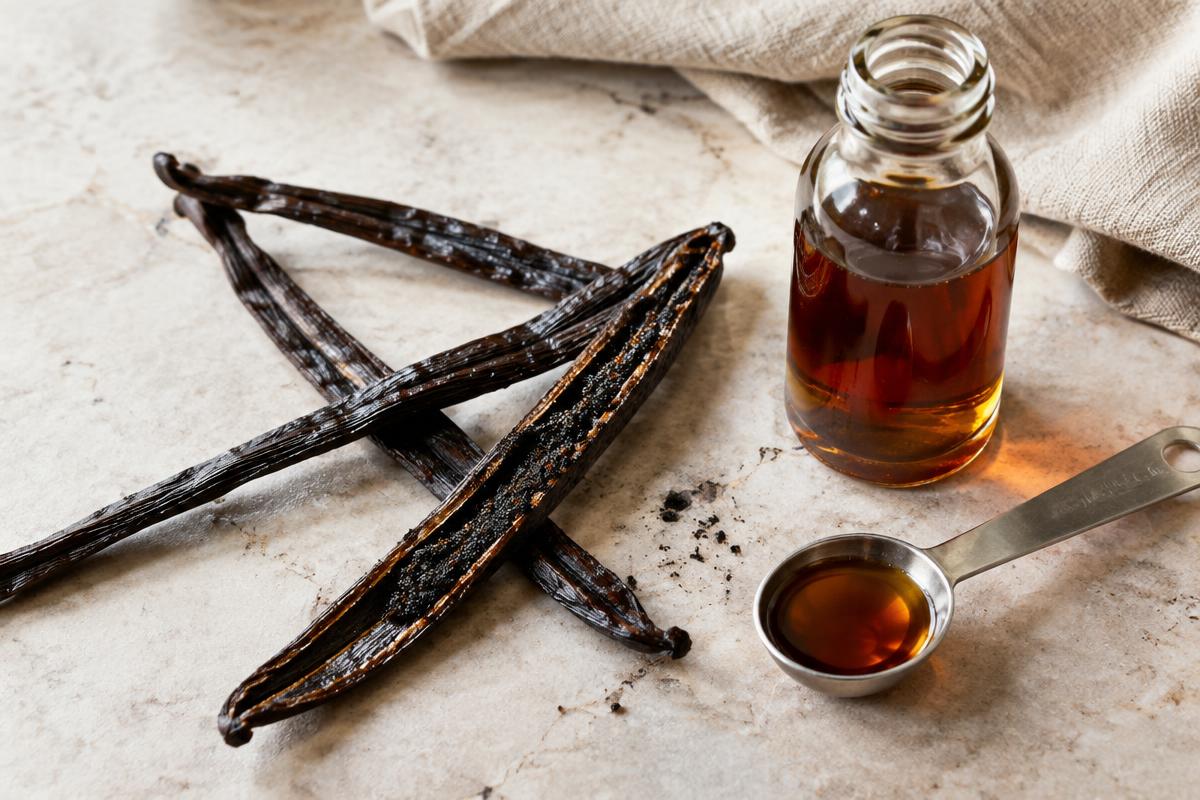
The first thing to understand is that traditional vanilla extract isn't simply vanilla beans and water.
Under U.S. regulations, vanilla extract is an aqueous ethyl-alcohol solution containing at least 35% ethyl alcohol by volume. The alcohol is used to extract the flavor compounds from vanilla beans.
Vanilla contains numerous flavor compounds, and ethanol is an effective solvent for extracting many of them from the beans. That's why alcohol has traditionally been used to produce vanilla extract.
This means that the small bottle of vanilla extract in your pantry can contain considerably more alcohol than you might expect.
However, there's an important distinction:
The vanilla extract itself is not the same thing as a cake, cookies, or other food made with a small amount of vanilla extract.
A recipe might use just ½ or 1 teaspoon of vanilla extract in an entire batch of food. This difference between the extract itself and the finished food is central to the scholarly discussion.
So, Is Vanilla Extract Halal?
There isn't one universally accepted answer.
The ruling can depend on factors such as:
- How much vanilla extract is used
- Whether the food is cooked or consumed without heating
- How much alcohol remains in the finished food
- The source of the ethanol
- The purpose for which the ethanol is being used
- Which scholarly opinion or school of Islamic jurisprudence you follow
Broadly speaking, there are several approaches to the issue.
Different Scholarly Views on Vanilla Extract
1. The stricter approach: Avoid intentionally added alcohol
Some scholars take the position that intentionally adding alcohol to food is not permissible, regardless of how small the amount may be.
From this perspective, the concern isn't simply whether the finished food could intoxicate someone. The issue is also that an alcohol-containing ingredient was deliberately introduced into the food.
Under this approach, traditional alcohol-based vanilla extract should be avoided.
If you follow this interpretation, you can use alternatives such as:
- Vanilla bean powder
- Alcohol-free vanilla extract
- Alcohol-free vanilla paste
- Halal-certified vanilla flavoring
- Other alcohol-free vanilla products
This approach provides a simple rule: if the ingredient contains ethanol and you want to avoid intentionally added alcohol, choose an alternative.
2. The negligible-amount or processing-aid approach
Other scholars distinguish between consuming alcohol as an intoxicating beverage and using a small amount of alcohol during food production.
Under this reasoning, a very small amount of alcohol that is incorporated into a food and does not remain in a meaningful or discernible form may not make the finished food impermissible.
IslamQA, for example, has ruled that vanilla containing alcohol can be consumed when the alcohol has no discernible effect in the finished food. Its reasoning includes the distinction between alcohol itself and food that has been treated with a small amount of alcohol.
However, IslamQA later published a clarification in 2024 because its vanilla ruling had been interpreted more broadly than intended.
The clarification explicitly distinguished between deliberately adding alcohol to food, which it says is not permissible, and consuming a food in which a small amount of alcohol is already present and has no discernible effect.
That distinction is important.
The permissibility of eating a food containing a tiny amount of alcohol should not automatically be interpreted as permission to pour alcohol into a recipe.
3. The Hanafi distinction between khamr and other forms of alcohol
Another important perspective comes from classical Hanafi jurisprudence.
Classical Islamic texts distinguish between khamr and other intoxicating substances. Some contemporary Hanafi scholars have applied this distinction when discussing modern industrial ethanol.
Under some Hanafi rulings, ethanol that is not derived from khamr sources such as grapes or dates may be treated differently from alcohol derived from those sources, particularly when it is used as a solvent or processing aid rather than as an intoxicating beverage.
This means the source and purpose of the ethanol can become relevant.
However, this is not a universal Hanafi ruling that every Hanafi scholar applies identically. If you follow the Hanafi school, it's worth checking the position of a qualified scholar or authority you trust.
Why Can Halal Authorities Have Different Standards?
This is one reason halal guidance on vanilla extract can seem confusing.
You may find a scholar who considers a food containing a small amount of vanilla extract permissible while a particular halal authority applies a different standard.
That doesn't necessarily mean one side is contradicting the other.
Halal certification standards and individual scholarly rulings can serve different purposes.
A certification organization has to establish rules that manufacturers can consistently document, audit, and follow. Those standards may differ from the minimum position accepted by an individual scholar.
And certification standards themselves are not identical worldwide.
For example, MUI's 2018 fatwa on alcohol and ethanol distinguishes between khamr-derived ethanol and non-khamr industrial ethanol. MUI states that non-khamr ethanol may be used in food products when the applicable conditions are met and the use is medically safe. Its guidance specifically recognizes industrial ethanol being used as a solvent or extraction aid.
MUI therefore should not be described simply as requiring all food manufacturers to use alcohol-free vanilla.
Other halal authorities use different limits.
For example, Singapore's MUIS Fatwa Committee states that ethanol used as a solvent in food flavoring is permissible when it is not derived from prohibited products, with a limit of 0.5% ethanol in the flavoring and 0.1% in the final product. MUIS describes these as requirements for the specific use of ethanol as a flavoring solvent.
These examples demonstrate why it's important not to treat one organization's ethanol threshold as a universal Islamic rule.
Does Alcohol Evaporate When You Cook With Vanilla Extract?
This is another common misconception.
You may have heard that “all the alcohol burns off when you bake it.”
That's not necessarily true.
Research on alcohol retention in cooked foods shows that some alcohol can remain after cooking. The amount depends on factors such as:
- Cooking temperature
- Cooking time
- Whether the food is covered
- The cooking method
- How the alcohol was incorporated into the food
- The amount initially added
In other words, cooking can reduce alcohol content, but it doesn't necessarily remove all of it.
It's also important not to treat general alcohol-retention studies as an exact measurement for a particular cake or cookie recipe. The amount remaining can vary considerably from one recipe and cooking method to another.
This distinction matters because some scholarly opinions focus not simply on whether any alcohol remains, but whether enough remains to have a meaningful or discernible effect.
What About Ice Cream and Other No-Bake Foods?
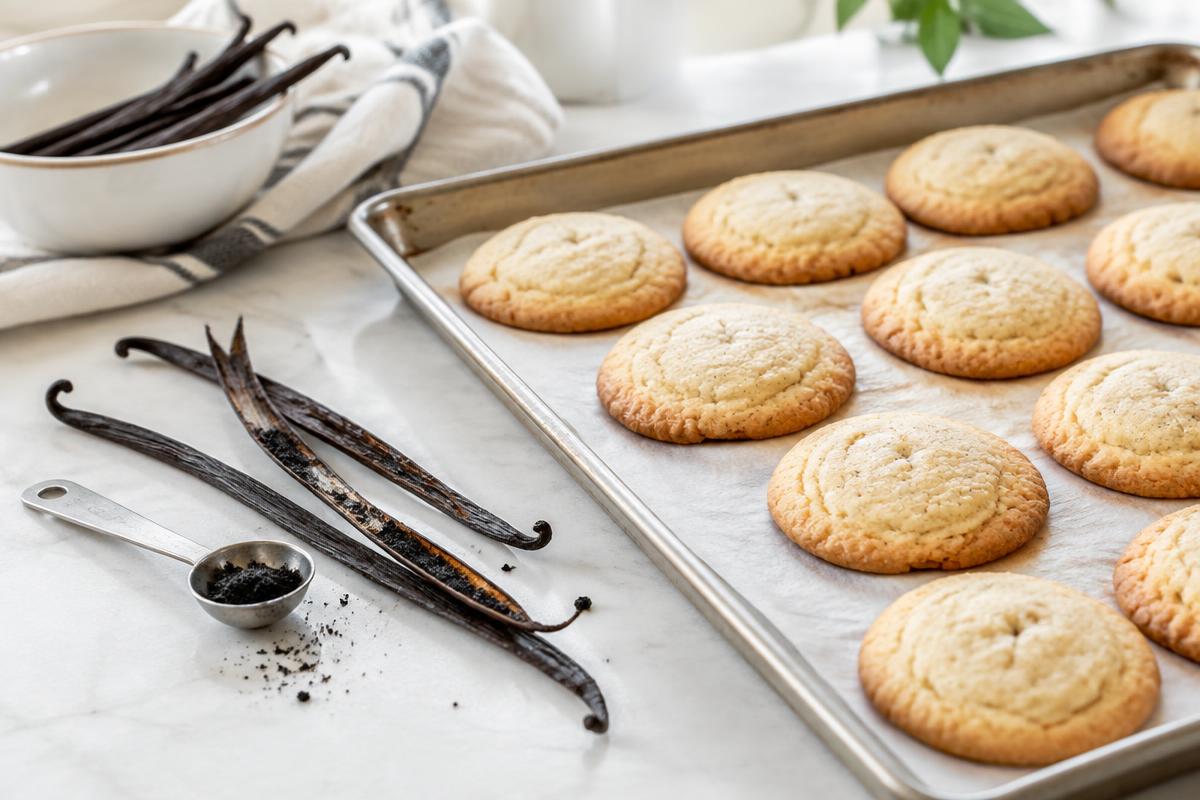
The situation can be somewhat different with foods that aren't cooked.
When vanilla extract is added to ice cream, frosting, smoothies, or other foods that aren't heated, you can't rely on cooking to reduce the alcohol content.
That doesn't automatically determine whether the food is halal. The amount used, the final concentration, the source of the ethanol, and the scholarly opinion being followed can all matter.
But if you follow a stricter approach, using an alcohol-free vanilla product can eliminate the concern entirely.
What Is the MUI Position on Industrial Ethanol?
The Indonesian Ulema Council (MUI) has specifically addressed alcohol and ethanol used in food production.
Its 2018 fatwa distinguishes between ethanol originating from khamr production and non-khamr industrial ethanol.
MUI states that non-khamr ethanol can be used in food products when the relevant conditions are satisfied and the use is medically safe. It also distinguishes between food and beverages when discussing ethanol concentration.
Importantly, MUI's position does not mean that every food containing ethanol is automatically halal.
Its fatwa states that food products to which khamr has been added are prohibited. It also establishes different rules for ethanol used in food, beverages, and intermediate products such as flavorings.
This is a good example of why the source, purpose, and use of ethanol can matter when evaluating a food product.
What Are the Best Halal Alternatives to Vanilla Extract?
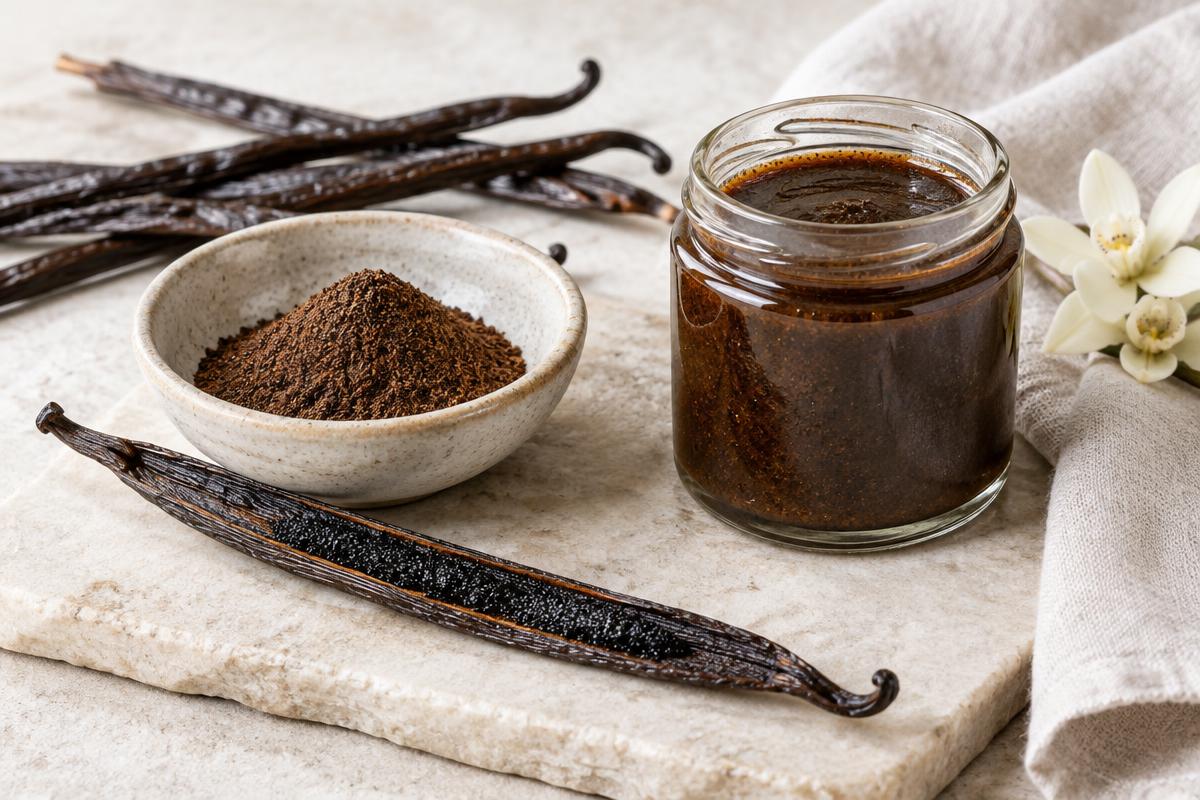
If you'd rather avoid the scholarly disagreement altogether, the good news is that there are several easy alternatives.
1. Vanilla Bean Powder
Vanilla bean powder is one of the simplest options.
It's made from dried vanilla beans that have been ground into a powder, so there is no ethanol-based extraction involved.
It also gives desserts those characteristic vanilla bean specks.
Because the strength varies between products, follow the manufacturer's recommended substitution ratio.
2. Alcohol-Free Vanilla Extract
Alcohol-free vanilla extract is another convenient substitute.
Instead of ethanol, some products use ingredients such as glycerin or propylene glycol to extract or carry the vanilla flavor.
U.S. regulations recognize glycerin and propylene glycol as optional ingredients that may be used in vanilla extract.
If avoiding alcohol is important to you, look for products specifically labeled alcohol-free and check the ingredient list.
A halal certification can provide additional reassurance.
3. Alcohol-Free Vanilla Paste
Vanilla paste can provide a rich vanilla flavor and often contains visible vanilla bean particles.
Look for an alcohol-free product if you want to avoid ethanol completely.
4. Synthetic Vanillin
Vanillin is the primary flavor compound associated with vanilla's characteristic flavor.
Synthetic vanillin can be produced without traditional alcohol-based vanilla extraction, making it another option for people who want to avoid ethanol.
As with any processed ingredient, check the complete ingredient list if you have additional halal requirements beyond alcohol.
How to Tell If Vanilla Flavoring Contains Alcohol
Reading the label can help, but the terminology isn't always straightforward.
“Vanilla Extract”
Traditional vanilla extract contains at least 35% ethyl alcohol by volume under U.S. standards.
If you're trying to avoid alcohol completely, look for a product specifically labeled alcohol-free or choose another form of vanilla.
“Vanilla Flavor” or “Vanilla Flavoring”
This terminology can be less straightforward.
Under U.S. regulations, vanilla flavoring is a defined product with less than 35% ethyl alcohol by volume, so seeing "vanilla flavoring" does not necessarily mean that the product contains zero alcohol.
If you want to avoid ethanol entirely, check the ingredients and look for an alcohol-free designation.
“Natural Flavor”
Natural flavor is a broad category and doesn't, by itself, tell you everything about how a flavor was produced.
If the presence or source of ethanol matters to your halal decision, look for additional information from the manufacturer or a halal certification body.
Does Halal Certification Guarantee Vanilla Is Alcohol-Free?
Not necessarily.
Halal certification means that the product has been evaluated according to the requirements of that particular certifying organization.
As the MUI and MUIS examples demonstrate, halal authorities can have different standards regarding the source and permitted use of ethanol.
If your specific goal is to avoid ethanol-based vanilla, check both:
- The ingredient list
- The product's certification and manufacturer information
A product specifically labeled “alcohol-free vanilla” provides clearer information than simply seeing a halal logo and assuming the product contains no ethanol.
Is Vanilla Bean Powder Halal?
Plain vanilla bean powder is generally considered halal because it consists of ground vanilla beans rather than an alcohol-based extract.
However, always check the ingredient list.
Some products marketed as vanilla powder may contain additional ingredients or flavorings. If you're following a strict halal standard, choosing a product with a clear ingredient list or halal certification can provide additional reassurance.
Can Muslims Eat Cake Made With Vanilla Extract?
Scholars differ on this question.
Some scholars permit foods containing small amounts of alcohol-based vanilla extract when the alcohol is so diluted or incorporated into the food that it has no intoxicating or discernible effect. IslamQA's ruling on vanilla takes this approach.
Other scholars recommend avoiding intentionally added alcohol and would therefore choose cake made with alcohol-free vanilla instead.
If you follow the stricter position, choose cake made with:
- Alcohol-free vanilla
- Vanilla bean powder
- Halal-certified vanilla flavoring
If you follow a scholarly opinion that permits negligible amounts of ethanol used as a flavoring or processing aid, a typical baked recipe containing a small amount of vanilla extract may be considered permissible.
Can You Drink Vanilla Extract?
This is a very different situation from using vanilla extract in a recipe.
Traditional vanilla extract contains at least 35% ethyl alcohol by volume in the United States. It is intended to be used as a flavoring ingredient, not consumed as a beverage.
The scholarly opinions that permit small amounts of alcohol-containing flavorings in food should not automatically be interpreted as permission to drink vanilla extract.
The quantity, purpose, and effect of the alcohol are important parts of the discussion.
Can You Eat Store-Bought Cookies and Desserts With Vanilla Extract?
If you're buying a packaged dessert and the ingredient list includes vanilla extract, the answer depends on the scholarly position you follow.
If you follow a strict interpretation that avoids intentionally added alcohol, you may want to choose products with:
- Halal certification
- Alcohol-free vanilla
- Vanilla bean powder
- Clearly identified alcohol-free flavoring
If you follow the view that permits negligible amounts of alcohol used as a flavoring or processing aid, you may consider the finished product permissible when the amount is sufficiently small and has no intoxicating or discernible effect.
When you're unsure, checking the manufacturer's information or choosing an alcohol-free alternative can eliminate the uncertainty.
Frequently Asked Questions
Is vanilla extract halal?
There is no single universally accepted answer. Traditional vanilla extract contains ethanol, and scholars differ on whether foods containing small amounts of alcohol-based vanilla extract are permissible. Some permit it when the amount is negligible and does not intoxicate, while others recommend avoiding intentionally added alcohol.
Is vanilla extract haram?
Traditional vanilla extract contains a significant amount of alcohol and should not be treated the same way as an alcohol-free flavoring. However, whether a food containing a small amount of vanilla extract is haram is a matter of scholarly disagreement.
Is alcohol-free vanilla extract halal?
Alcohol-free vanilla extract avoids the specific concern associated with ethanol-based vanilla extract. If you want the clearest option, choose a product that is explicitly alcohol-free and, when possible, halal-certified.
What is alcohol-free vanilla extract made from?
Alcohol-free vanilla products commonly use solvents or carriers such as glycerin or propylene glycol instead of ethanol. Check the individual product's ingredient list because formulations vary.
Is vanilla bean powder halal?
Plain vanilla bean powder is generally halal because it consists of ground vanilla beans rather than an alcohol-based extract. Check the ingredient list for any additional ingredients.
Does cooking remove all the alcohol from vanilla extract?
No. Cooking can reduce the amount of alcohol, but it does not necessarily eliminate all of it. The amount remaining depends on the cooking method, temperature, time, and other factors.
Can I eat cookies made with vanilla extract?
Scholars differ on this question. Some permit foods containing small amounts of alcohol-based vanilla extract, while others recommend avoiding intentionally added alcohol. If you follow a stricter interpretation, choose cookies made with alcohol-free vanilla or halal-certified ingredients.
What's the difference between vanilla extract and vanilla flavor?
Vanilla extract is traditionally made by extracting vanilla beans with an alcohol-and-water solution. Vanilla flavoring is a broader term and can refer to products made using different extraction methods or flavor compounds. If avoiding alcohol is important to you, don't assume that "vanilla flavor" automatically means alcohol-free.
Is synthetic vanillin halal?
Synthetic vanillin does not contain the alcohol associated with conventional vanilla extraction and is generally considered halal from an alcohol standpoint. Check the complete ingredient list of the specific product if you have additional halal concerns.
How can I tell whether a product uses alcohol-based vanilla?
Check the ingredient list for terms such as "vanilla extract" and look for an "alcohol-free" statement or halal certification. If the information isn't clear, contact the manufacturer and ask whether ethanol is used in the vanilla flavoring or extraction process.
The Bottom Line: Is Vanilla Extract Halal?
The answer depends on which scholarly interpretation you follow and what exactly you're consuming.
Traditional vanilla extract contains a substantial amount of ethanol, so it should not be thought of as an alcohol-free ingredient. However, the question becomes more nuanced when a small amount of that extract is used in an entire recipe.
Some scholars permit foods containing small amounts of alcohol-based vanilla extract because the quantity in the finished food is negligible and the alcohol is being used as a flavoring solvent rather than consumed as an intoxicating beverage.
Other scholars take a stricter position and recommend avoiding intentionally added alcohol altogether.
Some Hanafi rulings also distinguish between khamr and non-khamr industrial ethanol, making the source of the alcohol relevant to their analysis.
So if you're wondering what to do in practice, there are two straightforward approaches:
If you want to avoid the issue completely: choose alcohol-free vanilla extract, vanilla bean powder, or another halal-certified vanilla product.
If you follow a scholarly opinion that permits negligible amounts of alcohol in food: a typical baked recipe containing a small amount of conventional vanilla extract may be considered permissible.
Ultimately, this is an area where legitimate differences of scholarly opinion exist. If the question is important to your personal practice, consider following the guidance of a qualified scholar or halal authority you trust.
The good news is that you don't have to give up vanilla desserts either way. Alcohol-free vanilla products are widely available, making it easier than ever to enjoy your favorite recipes without worrying about the issue.
You May Also Like
All Guides
Is It Halal?
Is Gelatin Halal? What Muslims Need to Know
Gelatin appears in sweets, capsules, yoghurts and desserts. What it is made from determines everything — here is how to read the label.
Is It Halal?
Is Whey Protein Halal?
Whey itself is a dairy by-product. The question is what happens during cheesemaking — specifically, which enzymes are used.
Is It Halal?
Is Marshmallow Halal?
Almost every marshmallow question is a gelatin question. Here is how to tell the permissible packs from the rest.
/guides/is-vanilla-extract-halal