Is It Halal?
Is Gelatin Halal? What Muslims Need to Know
Gelatin appears in sweets, capsules, yoghurts and desserts. What it is made from determines everything — here is how to read the label.
September 15, 2026 · 12 min read
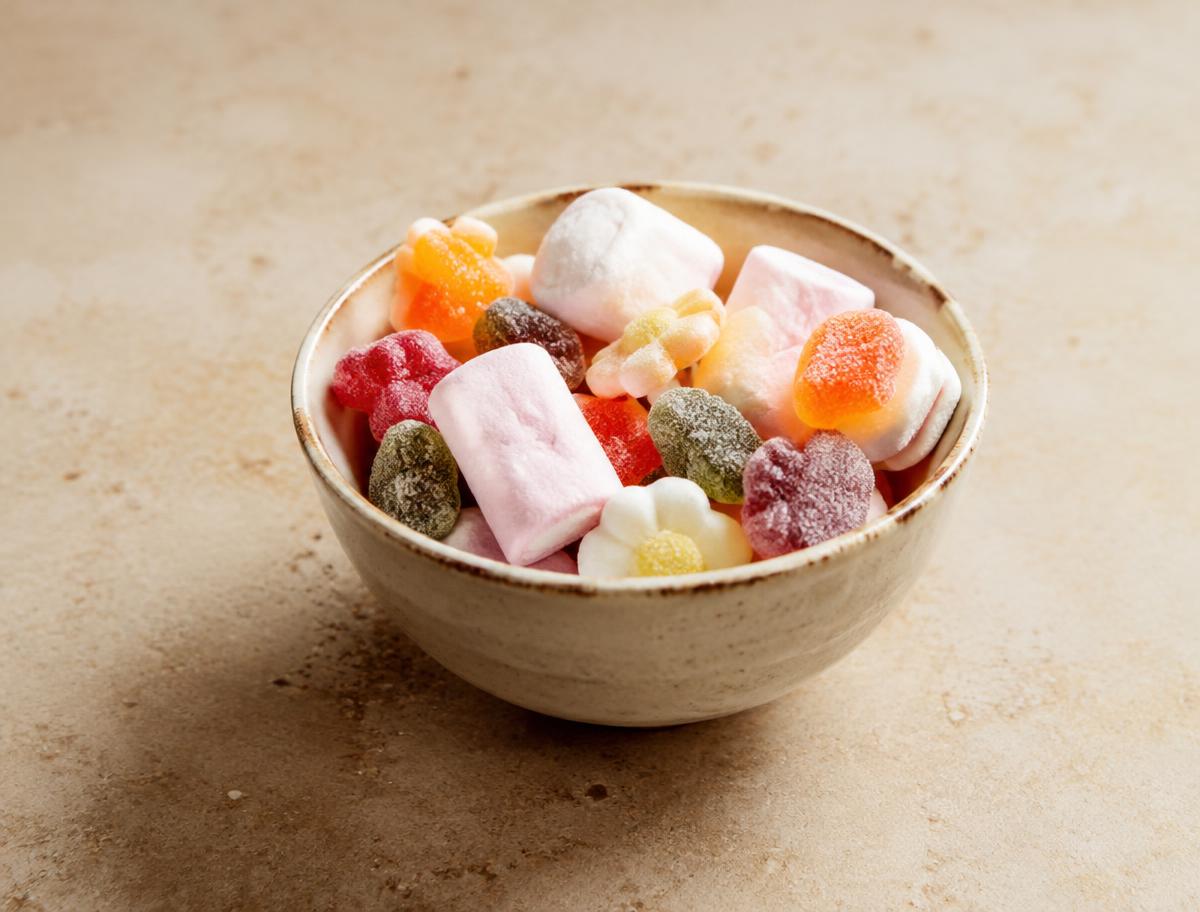
If you've ever checked the ingredients on gummy bears, marshmallows, yogurt, or supplements, you've probably come across gelatin.
But if you follow a halal diet, you may have wondered: Is gelatin halal?
The answer is: it depends on where the gelatin comes from and, for certain animal sources, how the animal was slaughtered.
Pork-derived gelatin is generally considered haram, while gelatin made from halal-slaughtered cattle can be halal. Fish gelatin is also generally considered halal. There is also a scholarly difference of opinion about whether the processing of gelatin constitutes istihala, or complete chemical transformation, which can affect the ruling according to some scholars.
That can make a seemingly simple ingredient surprisingly complicated.
In this guide, we'll explain where gelatin comes from, how different types are treated under Islamic dietary law, what istihala means, and how to identify halal gelatin when you're shopping.
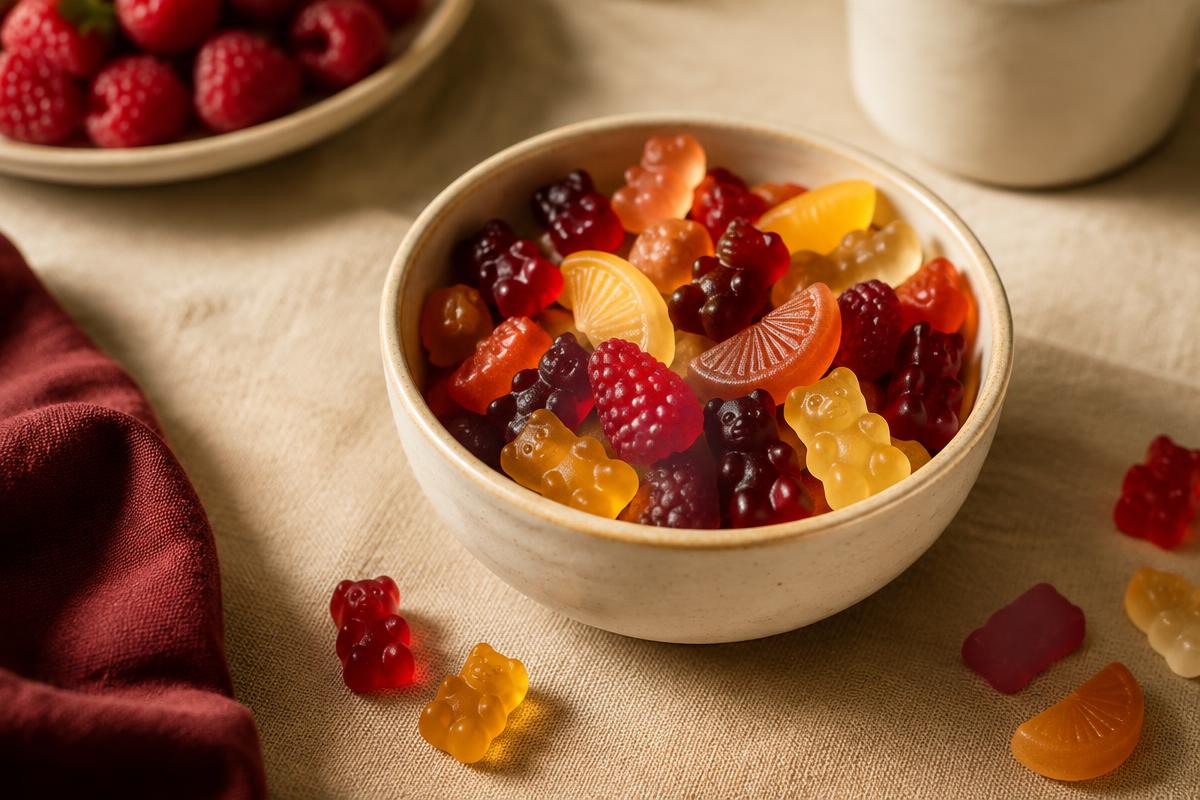
Is Gelatin Halal?
Gelatin can be halal, but not all gelatin is halal. Pork-derived gelatin is generally considered haram, while halal-certified bovine gelatin and fish gelatin can be halal. The source of the gelatin and applicable Islamic requirements determine its status.
| Gelatin Source | Generally Considered Halal? | What to Know |
|---|---|---|
| Pork / porcine gelatin | No | Pork-derived ingredients are generally considered haram |
| Halal-certified bovine gelatin | Yes | Comes from cattle that meet applicable halal requirements |
| Bovine gelatin with unknown source | Verify | “Bovine” only identifies the animal source |
| Fish gelatin | Generally yes | Fish generally do not require the same slaughter requirements as land animals |
| Pectin | Yes | Plant-based alternative |
| Agar-agar | Yes | Plant-based alternative |
So, seeing the word “gelatin” on an ingredient label isn't enough to determine whether a product is halal.
You need to know its source.
What Is Gelatin?
Gelatin is a protein made by processing collagen, a structural protein found in animal skin, bones, and connective tissue.
Manufacturers typically produce gelatin by extracting collagen from animal materials and processing it through steps such as heating, washing, and treatment with acids or alkalis. The resulting gelatin can be dried into a powder or formed into sheets.
Gelatin is popular in food manufacturing because it can:
- Give foods a chewy texture
- Help liquids form a gel
- Stabilize certain products
- Thicken foods
- Improve texture and consistency
That's why you can find gelatin in products ranging from gummy candy and marshmallows to desserts, dairy products, supplements, and pharmaceutical capsules.
The important question for Muslims isn't simply “Does this product contain gelatin?”
It's:
“What is the gelatin made from?”
Why Does the Source of Gelatin Matter?
Islamic dietary law distinguishes between animals that are permissible to eat and those that are not.
Pigs, for example, are prohibited. Cattle, sheep, goats, and chickens are generally permissible animals, but land animals that are otherwise halal must also meet applicable Islamic slaughter requirements.
This becomes important when gelatin is made from animal tissues.
Pork Gelatin
Gelatin made from pigs is generally considered haram.
You may see it described on an ingredient label as:
- Pork gelatin
- Porcine gelatin
- Pig gelatin
- Porcine-derived gelatin
If a product clearly identifies its gelatin as coming from pork, Muslims who follow the mainstream view that porcine gelatin remains prohibited would avoid it.
Beef or Bovine Gelatin
Beef gelatin can be halal, but “beef gelatin” does not automatically mean “halal gelatin.”
Bovine gelatin simply means that the gelatin came from cattle.
For Muslims who follow the view that gelatin must come from an animal slaughtered according to Islamic requirements, the cattle must also have been slaughtered appropriately.
That's why halal certification can be particularly useful when buying products containing bovine gelatin.
Fish Gelatin
Fish gelatin is generally considered halal because permissible fish do not require the same type of ritual slaughter as land animals.
This makes fish gelatin a popular alternative for manufacturers producing halal products.
However, the specific fish species and other ingredients in the finished product can still matter.
What Is Istihala?
One reason you may find different answers to the question “Is gelatin halal?” is a concept in Islamic jurisprudence called istihala.
Istihala generally refers to a substantial transformation in which one substance changes into another substance with different characteristics.
A commonly discussed example is the transformation of wine into vinegar.
The question surrounding gelatin is whether the industrial processing of animal collagen into gelatin constitutes a sufficiently complete transformation to change its religious ruling.
And this is where scholars differ.
The Majority View
Many contemporary halal-certification organizations and scholars do not consider the processing of conventional porcine gelatin to be sufficient istihala to make it halal.
Under this approach, gelatin retains a meaningful connection to its prohibited animal source, so pork-derived gelatin remains prohibited.
The same principle can apply to gelatin made from cattle that were not slaughtered according to applicable Islamic requirements.
The Alternative View
Some Islamic scholars and religious authorities recognize istihala more broadly.
Under this approach, if an original substance undergoes a sufficiently complete transformation during processing, its ruling may change.
This can lead to different conclusions about gelatin depending on the source and the scholar's interpretation of istihala.
Because of this disagreement, you may encounter products or religious guidance that reach different conclusions about processed gelatin.
If you follow a particular school of thought, halal-certification standard, or local scholar, it can be useful to follow the standard you normally rely upon.
Is Fish Gelatin Halal?
Fish gelatin is generally considered halal.
Fish generally do not require the same type of Islamic slaughter as land animals, which makes fish gelatin considerably less complicated from a halal perspective.
For this reason, fish gelatin is sometimes used as an alternative to pork or non-halal bovine gelatin.
If a product specifically states that it contains fish gelatin, that provides useful information about the ingredient's source. You should still check the rest of the ingredient list and, when possible, look for halal certification.
Plant-Based Alternatives to Gelatin
If you would rather avoid the gelatin question altogether, there are several plant-based alternatives.
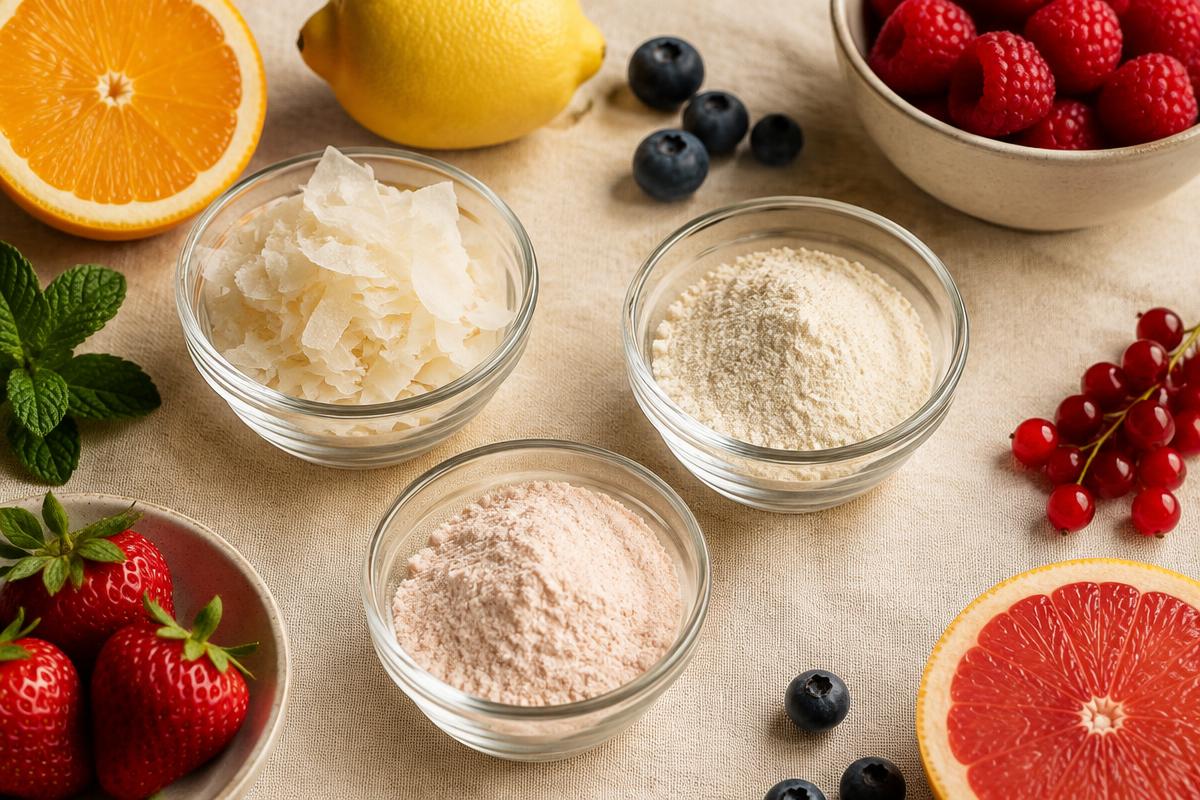
Pectin
Pectin is a plant-based ingredient commonly derived from fruits.
It's frequently used in jams, jellies, fruit snacks, and some candies.
Agar-Agar
Agar-agar is derived from seaweed and can be used as a gelling agent in desserts and other foods.
Carrageenan
Carrageenan is another seaweed-derived ingredient used as a thickener and stabilizer.
Konjac
Konjac is derived from a plant root and is used as a thickening or gelling ingredient in various foods.
These ingredients don't come from animal gelatin, which can make them convenient options for people who want to avoid animal-derived ingredients.
Of course, the rest of the product's ingredients should still be checked.
How to Tell If Gelatin Is Halal
Knowing the theory is helpful, but what do you actually do when you're standing in the grocery store?
Here are some practical ways to check.
1. Look for Halal Certification
A halal certification logo can be one of the easiest ways to identify a product that has been evaluated according to a certifier's halal standards.
This is especially useful when the ingredient list contains animal-derived ingredients whose sources aren't obvious.
2. Check the Ingredient List
Look for terms such as:
- Gelatin
- Porcine gelatin
- Pork gelatin
- Bovine gelatin
- Beef gelatin
- Fish gelatin
If the label only says “gelatin” and doesn't identify the source, the ingredient list alone may not tell you whether it is halal.
3. Check the Manufacturer's Website
Some companies provide additional information about their ingredients online.
You may find information about whether their gelatin comes from:
- Pork
- Halal-certified cattle
- Fish
- Another source
If the information isn't available, you can contact the manufacturer directly.
4. Look for Plant-Based Alternatives
If you're unsure about an animal-derived gelatin, you can look for products made with ingredients such as:
- Pectin
- Agar-agar
- Carrageenan
- Konjac
Vegan products generally don't contain animal gelatin, although it's still a good idea to check the complete ingredient list.
What Does E441 Mean?
If you're shopping for food in Europe or buying imported products, you may see E441 on an ingredient list.
E441 is the food additive designation for gelatin.
Seeing E441 doesn't tell you what animal the gelatin came from.
Therefore, if you're concerned about the source, you'll still want to look for halal certification or additional information from the manufacturer.
Is “Bovine Gelatin” Automatically Halal?
No.
“Bovine” simply means the gelatin came from cattle.
Whether bovine gelatin is halal depends on the requirements you follow concerning the animal's source, slaughter, and processing.
This is why there is an important distinction between:
Bovine gelatin → identifies the animal source
Halal bovine gelatin → indicates that the ingredient has been produced according to applicable halal requirements
When possible, look for a halal certification rather than assuming that all bovine gelatin is halal.
Is Gelatin in Gummy Bears Halal?
It depends on the type of gelatin used.
Some gummy candies contain pork-derived gelatin, while others use bovine gelatin, fish gelatin, pectin, or another alternative.
If the package doesn't identify the source of the gelatin, check whether the product has halal certification or contact the manufacturer.
There are also many products specifically marketed as halal gummies that use halal-certified gelatin or plant-based alternatives.
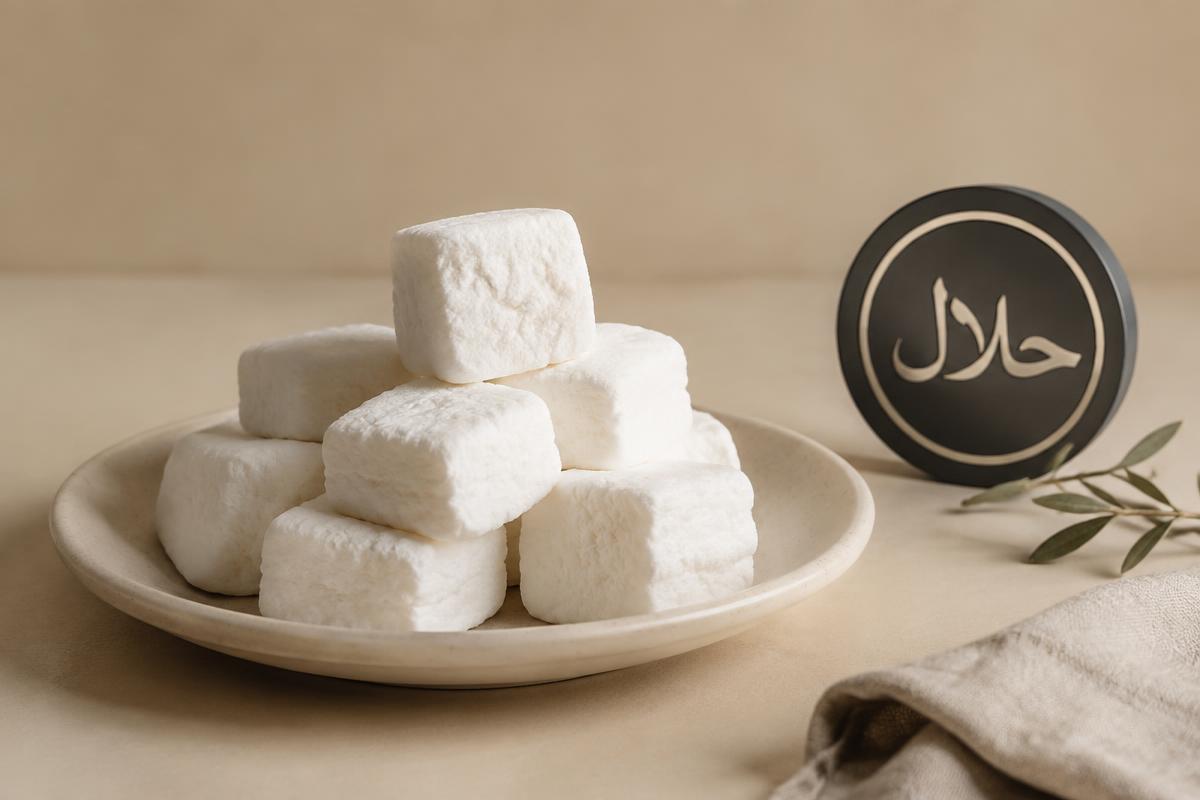
Are Marshmallows Halal?
Marshmallows can contain gelatin, which means they aren't automatically halal.
Some conventional marshmallows use pork-derived gelatin, while halal marshmallows may use halal-certified bovine gelatin, fish gelatin, or plant-based alternatives.
Always check the ingredient list and halal certification when available.
Is Gelatin in Yogurt Halal?
Some yogurt products use gelatin as a stabilizer or texturizing ingredient, while others use different ingredients.
If a yogurt contains gelatin, its halal status depends on the source of that gelatin.
Don't assume that all yogurt contains gelatin, either. Many products use other stabilizers or thickeners.
Is Gelatin in Medicine Halal?
Gelatin is commonly used in pharmaceutical products, particularly in capsules and some other formulations.
This can create a difficult situation for Muslims who discover that a medication contains gelatin from a source they avoid.
If you take a medication containing gelatin, don't stop taking it on your own.
Instead:
- Ask your pharmacist whether the gelatin source is known.
- Ask whether a gelatin-free or halal-certified alternative is available.
- Contact the manufacturer if additional information is needed.
- If there is no suitable alternative and the medication is medically necessary, consult a knowledgeable Islamic scholar about the principle of necessity (darura).
Islamic jurisprudence recognizes necessity as a consideration in situations where avoiding a prohibited substance would create serious harm and no suitable permissible alternative is available.
The exact application can depend on the circumstances, so medical and religious advice may both be appropriate.
What About Supplements With Gelatin Capsules?
Supplements are another common place where gelatin can appear.
If you're buying vitamins or supplements, check whether the capsule is made from:
- Pork gelatin
- Bovine gelatin
- Fish gelatin
- Vegetable cellulose
Vegetable capsules are often made from cellulose rather than gelatin, making them a convenient alternative for people avoiding animal-derived capsules.
However, don't assume the entire supplement is halal simply because the capsule is plant-based. Other ingredients should also be checked.
Common Mistakes When Checking for Halal Gelatin
Assuming all gelatin is haram
This is an oversimplification.
Fish gelatin and properly sourced halal bovine gelatin can be halal according to the relevant Islamic requirements.
Assuming all beef gelatin is halal
This is also an oversimplification.
“Bovine” tells you the gelatin came from cattle, but it doesn't necessarily tell you whether the cattle were slaughtered according to halal requirements.
Assuming all gelatin is halal because it has been processed
This reflects the istihala position accepted by some scholars, but it isn't the view followed by all scholars or halal-certification organizations.
Assuming a product is halal because it's vegetarian
A vegetarian or vegan product generally won't contain animal gelatin, but you should still check its other ingredients if you're specifically looking for halal certification.
Assuming an imported product is automatically halal
Products made in Muslim-majority countries may be more likely to carry halal certification, but country of origin alone doesn't establish that every product or ingredient is halal.
What Should You Do If the Label Just Says “Gelatin”?
This is probably the most practical question of all.
If an ingredient list simply says “gelatin”, you may not be able to determine its source from the label alone.
Your options are:
Look for halal certification. This is generally the easiest solution.
Check the manufacturer's website. The company may identify the source of its gelatin.
Contact the manufacturer. Ask specifically whether the gelatin is pork-derived, bovine, fish-derived, or another type, and whether the bovine source is halal-certified.
Choose an alternative. Look for a similar product made with pectin, agar-agar, or another plant-based ingredient.
If you follow a particular scholarly opinion regarding istihala, you may also want to consider whether that position affects how you personally approach products containing unspecified or transformed gelatin.
Frequently Asked Questions
Is gelatin halal?
Gelatin can be halal, but not all gelatin is halal. Pork-derived gelatin is generally considered haram, while halal-certified bovine gelatin and fish gelatin can be halal.
Is pork gelatin haram?
Yes. Pork and ingredients derived from pork are generally considered haram under Islamic dietary law.
Is beef gelatin halal?
Beef gelatin can be halal if it comes from cattle that meet applicable halal requirements. The term “bovine gelatin” alone does not guarantee that it is halal.
Is fish gelatin halal?
Fish gelatin is generally considered halal because permissible fish do not require the same ritual slaughter requirements as land animals.
Is bovine gelatin halal?
Bovine gelatin can be halal, but it depends on the source and applicable halal requirements. Look for halal certification when possible.
What is E441?
E441 is the European food additive designation for gelatin. The code identifies gelatin but doesn't tell you whether the gelatin came from pork, cattle, fish, or another source.
Are gummy bears halal?
Some gummy bears are halal and others are not. Check the gelatin source and look for halal certification.
Are marshmallows halal?
Not all marshmallows are halal. Some contain pork-derived gelatin, while others use halal-certified gelatin or plant-based alternatives.
Can Muslims take medicine with gelatin capsules?
The answer can depend on the gelatin source, available alternatives, and medical necessity. If you're unsure, ask your pharmacist about the capsule's ingredients and consult a knowledgeable Islamic scholar if necessary. Don't stop a prescribed medication without medical advice.
Are pectin and agar-agar halal?
Pectin and agar-agar are plant-based ingredients and are generally considered halal. As with any processed food, other ingredients in the product should still be checked.
Is gelatin in yogurt halal?
Gelatin in yogurt is generally considered halal when it comes from halal sources such as zabiha cattle or fish. Many yogurts don't actually contain gelatin at all, using pectin or other plant-based thickeners instead. Check the ingredient list and look for halal certification to be more confident about what's in the tub.
Can vegetarian gelatin be haram?
Truly vegetarian gelatin substitutes like agar-agar, carrageenan, pectin, and konjac come from plant sources and are generally considered halal. If a product is labeled vegetarian or vegan, it won't contain animal gelatin — though it's still worth checking the other ingredients.
Does halal gelatin taste different?
Halal gelatin can be made from different sources, including cattle and fish. The final product's taste and texture depend on the type of gelatin and how it is used. Fish gelatin can behave somewhat differently from mammalian gelatin in certain applications.
Related Halal Guides
- Are marshmallows halal?
- Halal gummy sweets taste test
- Is whey protein halal?
- How to read halal certification marks
- Halal grocery shopping guide
The Bottom Line: Is Gelatin Halal?
Gelatin isn't automatically halal or haram. Its status depends primarily on its source and, for certain animal sources, how that source was obtained.
Here's the simplest way to think about it:
- Pork or porcine gelatin: Generally considered haram
- Halal-certified bovine gelatin: Halal
- Bovine gelatin without verified halal status: Check the source
- Fish gelatin: Generally halal
- Pectin, agar-agar, and other plant-based alternatives: Generally halal
There is also a genuine scholarly disagreement over istihala, or whether the processing of gelatin constitutes a complete enough transformation to change its ruling. Because of this, Muslims may encounter different answers depending on the scholar, school of thought, or halal-certification standard they follow.
For everyday shopping, the simplest approach is to look for halal certification, verify the source of animal-derived gelatin, or choose a plant-based alternative when you're uncertain.
When the answer isn't clear, there's nothing wrong with contacting the manufacturer or asking a knowledgeable scholar. Ingredient sourcing can be complicated, and asking questions is often the best way to make an informed choice that aligns with your beliefs.
You May Also Like
All Guides
Is It Halal?
Is Vanilla Extract Halal?
Muslim scholars and halal authorities have different views on whether small amounts of alcohol-based vanilla extract are permissible in food.
Is It Halal?
Is Whey Protein Halal?
Whey itself is a dairy by-product. The question is what happens during cheesemaking — specifically, which enzymes are used.
Is It Halal?
Is Marshmallow Halal?
Almost every marshmallow question is a gelatin question. Here is how to tell the permissible packs from the rest.
/is-gelatin-halal